Showing posts with label painting. Show all posts

Thursday, 8 September 2011

Tjibbe Hooghiemstra

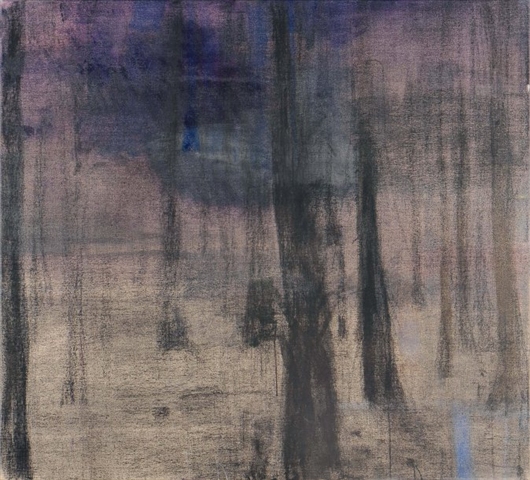
Tjibbe Hooghiemstra - Bos met blauw paaltje - seen here


During the recent exhibition at Oriel Myrddin Gallery of painter Roger Cecil we were visited by a couple on holiday from Holland who had specifically sought out the gallery. They loved the show and told us about a number of painters in Holland who reminded them of Cecil's work. My favourite of their recommendations is Tjibbe Hooghiemstra,  a Dutch painter, he has strong links with Ireland, especially Ulster where he has taught at the university and exhibited widely. 

Tjibbe Hooghiemstra - The for Miles and Miles Only Wind I - seen here


This makes a lovely, natural connection with our forthcoming exhibition at Oriel Myrddin Gallery which opens on Friday at 7pm. The Dutch Collection - an exhibition of contemporary Dutch design curated by Pembrokeshire's Freshwest Design.

Tjibbe Hoogheimstra - Maanlicht - seen here


Tuesday, 5 July 2011

Homage: New works by Roger Cecil

Roger Cecil - Untitled 2011


We are delighted at Oriel Myrddin Gallery to have opened our current exhibition of paintings by Abertillary artist Roger Cecil. We were very lucky to have a show of Roger's work at the gallery called Cariad in 2006, and now, 5 years later a completely new body of work has been created especially to show in the gallery. 

The progression in Roger's work in those 5 years is self evident in this cohesive collection of works, more minimal and less 'worked' than previous paintings, the artist often allows the board on which he works to become part of the composition. These are resolved and confident works from one of Wales' best painters working in the mature years of his career. It is inspiring to find an artist continuing to push his practice and develop his work at this stage of his life when it might be quite easy to rest on one's laurels.


Roger was at the opening on Saturday 25 June, but with customary modesty left the building when Meg Anthony, the Gallery Manager spoke about him and his working processes, he is a down-to-earth man who finds superlatives uncomfortable.

We are very proud that this show is being exclusively shown in the gallery, it continues until 27 August. If you are at all interested in contemporary painting, don't miss this exceptional show!

Sunday, 9 January 2011

Paul Emmanuel - Fleece Painting

Paul Emmanuel - Cefn Coed Isaf - Photo: Paul Emmanuel


The new show at Oriel Myrddin Gallery, Paul Emmanuel -  Fleece painting opened last Friday evening. Paul was with us to hang the show and it has been a pleasure to talk with him and watch the show unfold in the gallery space.

All the works are made using raw sheep fleeces gathered locally to the artist's home and studio in the Brecon Beacons. Each piece is treated with a process involving oil paints and other media along with human hairstyling products and techniques, and then named after the farm from which it was sourced. The catalogue essay for the show has been written by Karen MacKinnon, Exhibitions Officer at The Glynn Vivian Gallery in Swansea who has watched the working process of the series develop.

Paul Emmanuel - Fleece Paintings (waiting to be hung)


Although I had seen some of the fleece works in the flesh as part of Oriel Mostyn's post refurbishment show, We have the mirrors, we have the plans... , I had mostly encountered them through photographs and had developed a particular expectation of the finished pieces which was very much confounded by the actual objects. I have been working on publicity with the lead image for the show Cefn Coed Isaf, a particularly powerful image. There are overtones of blood, violence, sex in this piece that are not necessarily typical. I was surprised that generally, I found the work light and funny alongside its many other conceptual layers.

Perhaps the first interpretation of this body of work addresses Emmanuel's role as an artist in a farming community, and specifically in Wales with its ever-present sheep farming stereotypes and jokes. Beyond that and an initial association with landscape and place there are complex issues at play. An investigation around 'nature versus culture', where do these two states and their particular languages meet, where do they cross over? Personally, I am reminded again of the philosopher John Gray's book, Straw Dogs: On humans and other animals. In a post-Darwinian age of evolutionary theories and genetic mapping, what distinguishes human and animal? What claim can human beings have to a unique position in the world?

Emmanuel's past work has questioned the idea of the 'painter' and the business of painting and that is also an important element in the work, he is playing with the boundaries of the discipline. The identifying dyes and markings which farmers apply to the fleece are still visible in some of the pieces and that is also part on the conversation. Bringing these works out from the studio, away from their natural environment and into a white space gallery demands another layer of conceptual interpretation, Paul mentioned that even the journey to bring the pieces into the gallery had been part of his ongoing dialogue with the work.

With its references to the human body and allusions to pubic hair there is an unsettling psychological aspect to the work, it challenges ideas about our sexuality and the overlays of romance and refinement we bring to it.

I'm looking forward to having the works in the gallery for the next six weeks and continuing to think about what they might mean and how they effect me.

The show continues until 26 February.
Friday, 17 December 2010

Don Van Vliet

Don Van Vliet - Ghost Red Wire 1967 - seen here


I am sad that Don Van Vliet a.k.a. Captian Beefheart died today. He painted throughout his life as well as making extraordinary music. Ghost Red Wire is my favourite painting, and here is Captain Beefheart's 10 commandments of guitar playing:


1. Listen to the birds. That's where all the music comes from. Birds know everything about how it should sound and where that sound should come from. And watch hummingbirds. They fly really fast, but a lot of times they aren't going anywhere.

2. Your guitar is not really a guitar. Your guitar is a divining rod. Use it to find spirits in the other world and bring them over. A guitar is also a fishing rod. If you're good, you'll land a big one.

3. Practice in front of a bush. Wait until the moon is out, then go outside, eat a multi-grained bread and play your guitar to a bush. If the bush dosen't shake, eat another piece of bread.

4. Walk with the devil. Old Delta blues players referred to guitar amplifiers as the "devil box." And they were right. You have to be an equal opportunity employer in terms of who you're bringing over from the other side. Electricity attracts devils and demons. Other instruments attract other spirits. An acoustic guitar attracts Casper. A mandolin attracts Wendy. But an electric guitar attracts Beelzebub.

5. If you're guilty of thinking, you're out. If your brain is part of the process, you're missing it. You should play like a drowning man, struggling to reach shore. If you can trap that feeling, then you have something that is fur bearing.

6. Never point your guitar at anyone. Your instrument has more clout than lightning. Just hit a big chord then run outside to hear it. But make sure you are not standing in an open field.

7. Always carry a church key. That's your key-man clause. Like One String Sam. He's one. He was a Detroit street musician who played in the fifties on a homemade instrument. His song "I Need a Hundred Dollars" is warm pie. Another key to the church is Hubert Sumlin, Howlin' Wolf's guitar player. He just stands there like the Statue of Liberty-making you want to look up her dress the whole time to see how he's doing it.

8. Don't wipe the sweat off your instrument. You need that stink on there. Then you have to get that stink onto your music.

9. Keep your guitar in a dark place. When you're not playing your guitar, cover it and keep it in a dark place. If you don't play your guitar for more than a day, be sure you put a saucer of water in with it.

10. You gotta have a hood for your engine. Keep that hat on. A hat is a pressure cooker. If you have a roof on your house, the hot air can't escape. Even a lima bean has to have a piece of wet paper around it to make it grow. 

Seen here

Tuesday, 12 October 2010

Ifor Davies

Ifor Davies - Ty Casglwr/House of an Accumulator - seen here


I went to visit artist Ifor Davies in his Penarth studio last week, I'm very excited that he has agreed to contribute three works to Oriel Myrddin Gallery's winter show, Lux. I have always liked Davies still life paintings and that is what we have chosen for the show. The images here are not those that will be shown but they capture very beautifully the atmospheric interiors, subtly imbued with symbolism. 

Ifor Davies has been a pivotal influence in Wales for many years from his early performance work in the Destruction of Art movement of 1960's, to the recent mosaic design installed by Tessa Hunkin in Westminster Cathedral. 

Ifor Davies - Ceithiant - seen here

Friday, 20 August 2010

Serena Rowe


Serena Rowe - Monet's Table - Oil on Board

Another update on LUX, the winter show at Oriel Myrddin Gallery. I'm so pleased that painter, Serena Rowe will be showing with us. I really like her still life works of beautifully simple domestic objects.

Serena Rowe - Bowl with Carving Knife - Oils on Board

Serena Rowe - Pile of Cutlery - Oils on board

Tuesday, 25 May 2010

Gareth Hugh Davies


Gareth Hugh Davies - Clochyrie 2008 - seen
here

One of the great things about Oriel Myrddin Gallery is that all the staff are artists too; we are all either practising artists, writers or crafts people or were trained as such. One of our crew, Gareth Hugh Davies is a painter and is currently showing work at St David's Hall Gallery in Cardiff. The show continues until 11 June.


Gareth Hugh Davies - Limen 2010 - seen here

Gareth uses painting to explore the liminal , the difficult to articulate thresholds, the unknowable and mysterious. He says of his own work: "My work is an investigation into the relationship between the aesthetic, cultural and mythological in landscape painting..." and painting is a unmatchable vehicle for this kind of exploration. He quotes Simon Morley on this process in his artists statement: '...a mental state in which this self is brought to the brink of dissolution through confrontation with the powerful experience of unboundedness of no longer being securely sited within a unified self'.


Gareth Hugh Davies - Equinox 2010 - seen here

Alongside this 'spritual' investigation, there is a darkness - menace, even, in Gareth's work. The traditional form of landscape painting provides an anchor which allows it to tread into unstable territory. Twighlight and night scenes make the familiar worrying, glowing orange lights in house windows, bonfires and car headlights become ambiguous points of connection in the indigo of dusk and night time. Welcoming and friendly on the one hand, dangerously alluring on another - we become moths at the flame. Tracks and traces in snowy woodlands lead us...where - to whom, or to what? Gareth had a solo show at Oriel Myrddin Gallery in 2007 entitled Olion, a Welsh word which hints at these tracks, traces and marks both in the content of his work and in the process of painting as a medium.

Friday, 7 May 2010

Peter Coviello


I went to the opening of a retrospective show at St. Dogmaels Gallery near Cardigan on May Day. The show features the work of my friend Peter Coviello who died in 2006. Peter was born in 1930 and would have been 80 this year; I only knew him for the last four or so years of his life. He did have a pretty full and wild time however, every inch an artist he led a 'complicated' and convoluted life.

He began his artistic career at Guildford School of Art with a traditional art school training for the times, and his own work was in the same mould in his early career. In the 1950's, exposure to the American Abstract Expressionists via Mark Rothko changed his perspective on painting overnight and his work began to explore the themes and ideas he was being exposed to. He was recognised fairly quickly and his work was bought for collections such as the Tate and Peter Styvesant. In 1960, Peter was curated as part of the exhibition Situation, which took place at the RBA (Royal Society of British Artists) Galleries, London.

His personal circumstances were to knock him into a different discipline for a while, as a potter he lived in Canada and, with his usual exemplary skill, he established himself to great accomplishment in that area for 10 years. When he came back to the UK, after a time in London, he came to live in west Wales having returned to painting. The next couple of decades saw him moving between London and Wales before he came to Rhos in Ceredigion with his then partner, Nura and stayed until his death.

Peter suffered with angina and had three heart bypass operations starting in his 40's, he was ill when I met him and he was candid about the fact that he would not be around for to much longer. I met him at the opening of a big solo show of paintings I put on at Carmarthen Library in 2002, we hit it off immediately and later that year we shared a show at the Guildhall in Cardigan. Various other smaller shows followed. He lived across the hills from me and we saw eye to eye. He was a mentor in some ways - wise, funny, charismatic and deeply involved with his art, but he was so alive and open to the world, I hope I was able to share some of my own experience and ideas with him too. It adds an amazing depth to a friendship when you are under no illusion that your time is limited from the start.

His work is many, many layered; it deals with the mysterious, the scientific, the religious, the sensual, the symbolic. He was latterly very interested in quantum physics and we had many long discussions about what that might mean for an artist. I miss him very much.

The show has been organised by artist and art historian Peter Rossiter who, along with many other artists in the Cardigan area, was similarly effected by Peter's friendship. It continues at St. Dogmaels' Gallery for about two months.

Saturday, 17 April 2010

Diana Heeks


Diana Heeks - Drawer 1 - seen here


Diana Heeks - Drawer 3 and 4 - seen here

Diana Heeks' recent body of work is the result of her MA studies originally at Cardiff and latterly at Aberystwyth School of Art. Diana originally trained as a painter in her home city, Birmingham. Her paintings are abstract, often referencing landscape, but my favourite works reference textiles. Diana has worked often with the visual culture of south Asia and the Middle East, and the paintings which reference clothing of this culture are some of my favourites. She has made a series of images entitled Jubba.

Diana Heeks - Jubba - seen here

In this image, the start of her MA studies can be glimpsed in the stripes and also I think a slight sense of frustration with the limitations of medium.


Diana Heeks - Drawer 2 - seen here

What I admire about Diana (other than the work itself) is her focused, uncompromising attitude to her practice. She has a deep understanding of her own motivations and interests and is unafraid to take months and years over examining and deconstructing the techniques, colours and subject matter that interest her with a kind of obstinate vision (she would call it 'playing').


Diana Heeks - Indian Yellow - seen here

I went to Diana's studio when she was still experimenting with ideas of pleating and corrugation, and ruminating on how it should develop. I really like the outcomes in the work from her final show.

Monday, 22 February 2010

Roger Cecil


Roger Cecil - Rising Up

We are very pleased at Oriel Myrddin Gallery to be originating a solo show in 2011 for Roger Cecil; Valley's painter based in Abertillery. Roger's show Cariad was shown at the gallery in 2006 (before I started working there). He is a remarkable artist, and in my eyes, underestimated for the exceptional work he has produced through his long career.

I first saw his work in London in the mid-late 90's at one of the big art fairs in Islington's Business Design Centre. A minimal, blacked plaster image with marks and patterns in its surface - it stood out to me as the best work I'd seen that day and I began to follow his career. I next went along to an opening for him in Cork Street with his gallery at the time, Gordon Hepworth and bought a small piece of his work (above). I had no idea at this time that he lived in Wales, I knew nothing of him except his work. Reading the exhibition catalogue I found out a bit about him, suddenly it seemed so obvious he was a Welshman!

Roger is now a friend and I'm very lucky to have a few of his works on my walls which are very highly treasured. I was asked to write a little piece for the Western Mail newspaper a couple of years past with the title My Favourite Work of Art - it's about the work shown above:

My favourite work of art is always in flux, my passions shift as my own ideas evolve – there is a trail of ‘favourites’ like way-markers throughout my own development. However I do own a little painting by the Valley’s artist Roger Cecil called ‘Rising Up’ which is a quiet but abiding influence and presence in my life. It is 20 x 25 cm, mixed media on canvas – a simple abstract composition but alive with the instinctively pure compositional vision which is present in all Roger’s work. The surface of finely polished plaster, grate blacking and oil paint scratched through with little lines and marks is refined and almost crafted, but in no way inhibits the spontaneity of the work. He manages a lovely and enviable balancing act between freedom and discipline, simplicity and sophistication. Joan MirĂ³ said “It is essential to have your feet firmly planted on the soil in order to leap into the air” and this tiny painting reminds me that the best work (and probably the best life) is always grounded and honest.

Wednesday, 17 February 2010

Sandra Winkworth - Sleeping Beauties


Sandra Winkworth - seen here

I like this new work by Australian artist Sandra Winkworth. She has recently been working with the collections of bird 'studyskins' kept in the Macleay Museum in the University of Sydney and has made a series of paintings called Sleeping Beauties.
Sandra Winkworth - seen here